
High Performance & The Hidden Cost No One Talks About.
Second in a series on High Performance & The Hidden Cost No One Talks About
Most high performers believe that once a crisis is over, life simply returns to normal.
Work resumes.
Responsibilities return.
And the mind convinces itself that everything has been processed and put behind us.
But the body keeps a very different record.
Because when the brain learns survival, the nervous system doesn’t simply forget.
It remembers.
And sometimes it remembers in ways we don’t recognise until years later.
When the Brain Learns Survival, the Body Pays the Price
The Body Didn’t Forget
The moment survival takes over, the nervous system makes a decision the body will remember for years.
In my last blog I described the moment my nervous system learned that survival mattered more than well-being.
What I didn’t understand then was that when the brain learns survival, the body quietly keeps the record.
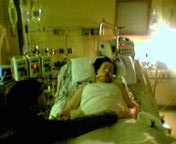
While my daughter lay on life support, time did something strange. It stopped moving forward.
Hospitals have a way of suspending the outside world. The usual noise of life disappears and you are left alone with your thoughts — far more of them than you would ever choose to have.
For two weeks I sat beside her bed watching machines breathe for her, listening to the relentless rhythm of monitors that reminded me just how fragile everything really was.
I remember a track by Pink playing quietly on the radio in the background — Just Like a Pill. When she sang about teenage angst and being on life support, the lyrics landed differently. In that moment it was impossible not to hear them through the reality my daughter and I were living.
And in those long silent hours, memories began to surface.
Not the big moments. The small ones.
The ones that suddenly felt impossibly important.
One memory in particular kept replaying in my mind like a film I couldn’t turn off.
The Memory That Haunted Me
It was a beautiful sunny afternoon. The kind of day that makes the world feel lighter. My daughter was sitting by the window, looking outside, watching other children playing. She turned to me and asked if we could go out for a bike ride.

She was bored.
She wanted to have some fun.
I remember barely looking up.
I was revising for one of the six law exams I was due to sit after the bank holiday weekend. My focus was on the textbooks in front of me, the pressure of the exams, the next step in building my career.
I told her we couldn’t go out that day.
There would be plenty of sunny days once the exams were over.
At the time it seemed like a perfectly reasonable decision.
After all, I was doing it for us. For our future. For the stability I believed my career would provide.
But sitting beside her hospital bed years later, watching the machines keeping her alive, that memory hit me with a force I had never experienced before.
In that moment I realised something that stopped me in my tracks.
Somewhere along the way I had forgotten to take pleasure in the moments that actually mattered.
Without ever consciously deciding it, I had slowly started choosing my career over her childhood.
And like so many high-performing professionals, I justified it to myself in ways that felt responsible at the time.
I told myself I was working hard so I could provide her with a beautiful home.
So she could have opportunities I never had.
So she could be proud of her mother.
But sitting in the Intensive Care Unit with my daughter, none of those justifications mattered.
All I could think about was the bike ride we never took.
What I didn’t understand then was that moments like that don’t simply disappear.
They stay with you.
They settle somewhere deeper than conscious memory — in your nervous system, in your body, in the quiet places where unresolved emotion is stored long after the event itself has passed.
At the time I didn’t have the language for what I was experiencing.
I thought it was simply guilt.
But what I now understand is that something much more powerful was happening.
My brain had learned survival.
Not reflection.
Not healing.
Not processing what had just happened.
Just survival.
And so I did what high performers are very good at doing.
I pushed forward.
On the surface I looked exactly the same as before.
But underneath the surface something fundamental had shifted.
Because when the brain learns survival, the body quietly begins to pay the price.
The Shoulder That Wouldn’t Heal
When life moves forward but the body quietly starts keeping score.
Within weeks of my daughter finally coming home, life began to return to something that looked vaguely normal.
Or at least the version of normal that follows a crisis.
In the midst of all that, I noticed something small.
A faint, nagging pain in the palm of my left hand.
At first it was barely noticeable — the kind of discomfort you assume will disappear if you simply get on with things.
And getting on with things was exactly what I was doing.
Life was busy again.
I was back at work trying to catch up, desperate to prove my worth and my gratitude for still having a job.
I began leaving the office earlier.
I made sure I was home for meals.
I prioritised family time.
But there was one person whose needs I still failed to consider.
My own.
I ignored the small nagging pain in my left hand.
Until it became impossible to ignore.
Eventually I booked an appointment with my GP.

That appointment marked the beginning of a medical journey that would stretch on for seven years.
MRI scans.
X-rays.
Physiotherapy.
Acupuncture.
Painkillers.
Each test ruled out another explanation.
But no one could explain the pain.
Meanwhile the discomfort spread through my arm and into my shoulder.
By 2012 I had almost completely lost the use of my left arm.
Eventually a diagnosis arrived.
Frozen shoulder.
Surgery restored some movement but never fully solved the problem.
For the next four years I relied on trapezia trigger-point injections just to manage the pain.
They brought temporary relief.
But they never solved the problem.
Trauma Lives in the Body
Why unresolved experiences don’t disappear — they become embedded in the nervous system.
What none of us understood at the time was that my body was holding onto something far deeper than a mechanical injury.
And it would take another four years before I discovered what that really was.
Because trauma does not simply live in our memories.
It lives in our bodies.

What I would eventually come to understand through my training and lived experience is something trauma specialist Dr Bessel van der Kolk explains so clearly in The Body Keeps the Score.
Trauma is not only a psychological memory.
It becomes a physiological imprint
When the brain learns survival, the body records the experience in ways we often fail to recognise — through chronic tension, persistent pain and nervous systems that remain on high alert long after the original danger has passed.
The Day My Shoulder Let Go
The moment I realised the pain was never really about my shoulder.
By 2016 I had lived with the pain in my shoulder for more than a decade.
Pain had become normal.
The turning point arrived in a training room.
In 2016 I enrolled on an EFT practitioner training course.
My agenda was simple.
I was imagining a new chapter of my life — one where I could still help people, just as I had done in my legal career.
But I had no expectation that it would have anything to do with my shoulder.
On the first day of the training my ego was in full display.
I proudly told the room my life was pretty close to perfect.
After all, I had a façade to maintain.
Then the training video played.
Pink’s F%king Perfect.
And suddenly memories surfaced.
The hospital.
My daughter on life support.
Tears began rolling down my face in a room full of strangers.
The next day I insisted I had nothing to work on.
The facilitator smiled.
“Were you the one crying yesterday?”
“Yes,” I said.
“What made you cry?”
“The song reminded me of when my daughter nearly died in 2005.”
I said it calmly.
Logically.
Matter-of-fact.
My brain had intellectualised the trauma.
But my body had not.
During the exercise I focused on those hospital memories.
And almost instantly an image surfaced.
The machines.
The monitors.
The helplessness.

Then something extraordinary happened. My left shoulder popped.
Literally. We both heard it.
The tightness that had lived there for years began to soften.
The pain shifted.
In that moment.
It felt as though my body had finally released something it had been holding onto for years.
Over the following months my muscles rebuilt. Today I have full movement again.
And I have never needed another trigger-point injection.
What That Moment Revealed
The body will hold what the mind refuses to process.
And suddenly the years of unexplained pain made sense.
The problem had never really been my shoulder.
It was what my shoulder had been carrying.
Eight weeks later I was diagnosed with breast cancer.
By that point the connection between trauma and physical health was no longer theoretical to me.
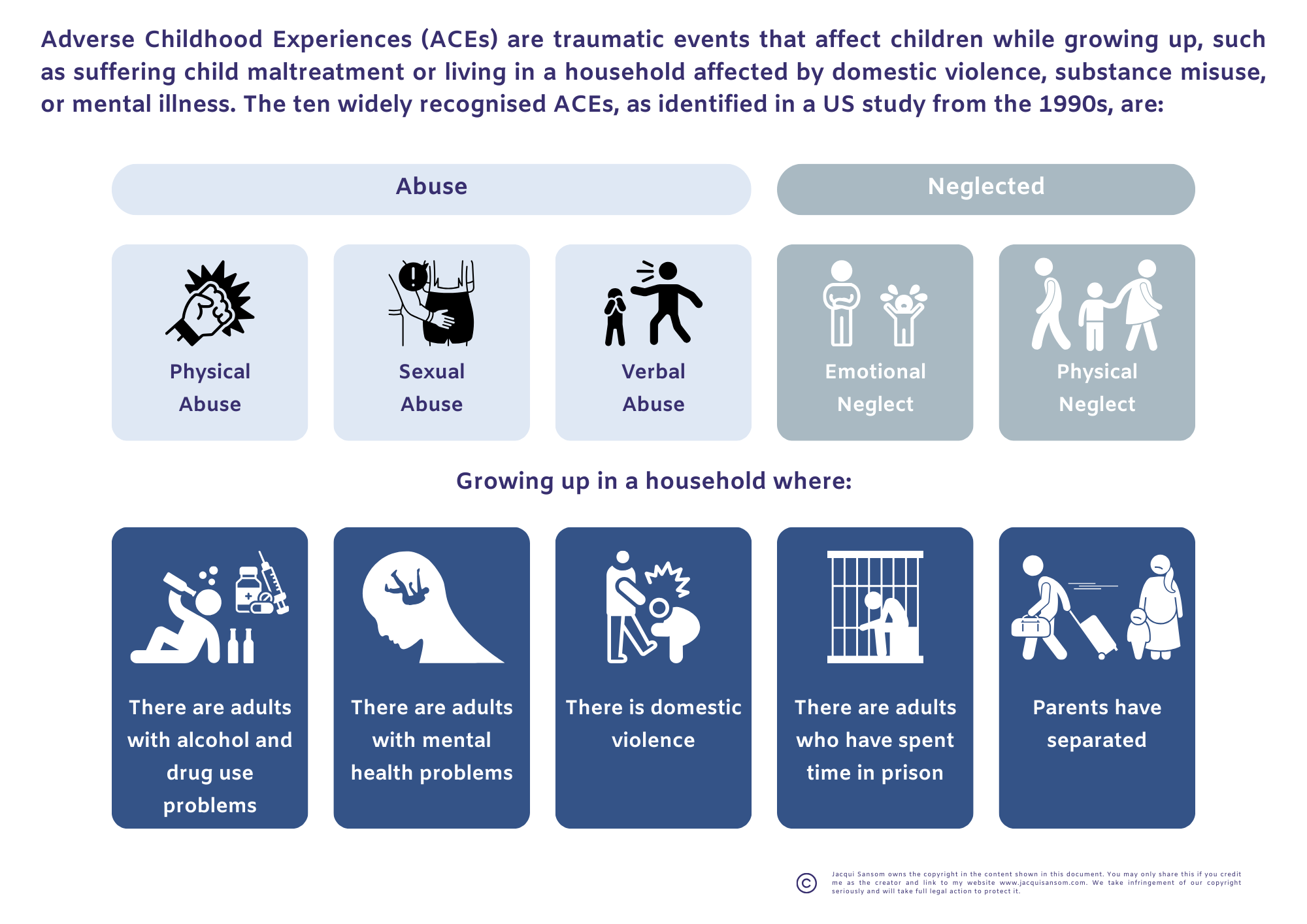
I understood the ACEs research linking childhood trauma to later disease.
If trauma could imprint itself in the body…
Healing had to go deeper than logic alone.
So I turned to the tools I had begun learning.
EFT.
NLP.
Hypnotherapy.
And began releasing the trauma my body had been carrying for years.
The Lesson That Changed My Work
Burnout is rarely caused by workload alone, it is the accumulated cost of survival wiring.
That experience changed everything about how I understand burnout.
Because burnout is not simply about stress.
It is the physiological cost of survival patterns that never switched off.
And many high performers are living in exactly that state.
What Most High Performers Never See Coming
High performance always extracts a cost.
The problem is that the cost is rarely visible while success is still being rewarded.
So we keep pushing.

We ignore the signals.
Until the body forces our attention.
I call this hidden cost The Performance Tax.
And in the next blog I’ll explain why the very traits that make high achievers successful also make them uniquely vulnerable to paying it.
Next in the Series
Blog 3:
The Performance Tax — Why High Achievers Pay for Success With Their Health
In the next article we’ll explore:
• what trauma actually does to the brain
• how the amygdala, hippocampus and prefrontal cortex change under pressure
• why high performers often live in functional survival mode
• and why burnout rarely begins where people think it does
